Body Fat Scales
In the modern era where people pay increasing attention to physical health and body management, daily health monitoring has gradually become an indispensable part of ordinary life. More individuals are no longer satisfied with understanding only their body weight, but hope to gain a comprehensive and in-depth insight into their physical conditions, so as to formulate more scientific diet, exercise and rest plans. A body fat scale, as a common and practical household health monitoring device, has become a popular tool for daily body condition tracking, helping people break the single cognitive limitation of traditional weight measurement and build a more three-dimensional and accurate understanding of their physical state.
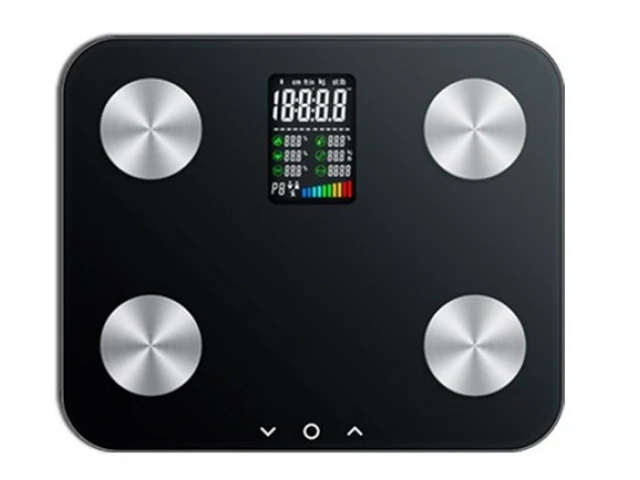
Different from traditional weighing devices that only display body weight data, a body fat scale can capture multiple physical indicators closely related to physical health through professional sensing technology. The core working principle of the device relies on the difference in electrical conductivity of different human tissues. Human muscle tissue contains more water and electrolytes, which can conduct weak current smoothly, while fat tissue has lower water content and weaker electrical conductivity. When a person stands on the scale steadily, the device will transmit safe and imperceptible weak current through the soles of the feet, collect the impedance data of human tissues through high-precision sensors, and then calculate and analyze various physical data through built-in intelligent algorithms. The whole detection process is safe, comfortable and fast, and will not cause any discomfort or harm to the human body, which is suitable for long-term daily household use.
The data that a body fat scale can provide covers multiple core dimensions of physical state, bringing comprehensive reference significance for personal health management. Body fat rate is one of the most concerned indicators, which reflects the proportion of fat mass in the total body weight. Many people simply take low weight as a symbol of good health, but this cognition is not scientific enough. Some people have a standard weight but a high body fat rate, which is often called “hidden obesity”. Excess fat accumulation in the body, even without obvious overweight performance, will increase the burden on metabolic organs and affect the body’s metabolic level and physical state. On the contrary, some people have a slightly higher weight but a low body fat rate and rich muscle content, and their physical endurance and metabolic capacity are often better. Therefore, body fat rate data can help people correctly distinguish between fat and muscle components in the body and avoid the misunderstanding of blind weight loss.
Muscle mass data is another key indicator monitored by the body fat scale, which plays an important role in judging physical fitness and metabolic level. Muscle is an important tissue that maintains human basic metabolism and physical vitality. Sufficient muscle mass can effectively improve the body’s basal metabolic rate, make the body more efficient in energy consumption, and help maintain a stable physical state. For people who adhere to fitness exercise, tracking muscle mass changes every day can intuitively reflect the effect of exercise and training. When adhering to strength training and reasonable protein intake, the gradual increase of muscle mass can verify the effectiveness of the exercise plan; if the muscle mass continues to decline during the weight loss period, it means that the current diet and exercise mode may be unreasonable, and it is necessary to adjust the plan in time to avoid muscle loss caused by excessive dieting or unreasonable exercise.
In addition to fat and muscle data, the body fat scale can also detect body water content, which is closely related to human physiological activities. Water participates in almost all metabolic processes in the human body, and stable body water content is the basis for maintaining normal operation of various organs and tissues. Insufficient body water will lead to slow metabolism, dry skin, fatigue and poor mental state, while excessive water retention may reflect problems such as poor body circulation and unbalanced electrolyte. By observing the changes of body water data, people can adjust their daily water intake reasonably, develop a good habit of regular and quantitative water drinking, and maintain the dynamic balance of body water, so as to ensure the stable progress of internal metabolism.
Bone mass and visceral fat data detected by the body fat scale are also of great guiding value for long-term health care. Bone mass reflects the development and health status of human bones. Long-term tracking of bone mass changes is conducive to early attention to bone health problems, especially for adolescents in the growth and development period, middle-aged and elderly people with declining bone density, and women after childbirth. Reasonable adjustment of diet and exercise according to bone mass data can help maintain good bone health. Visceral fat is the fat accumulated around human internal organs. Different from subcutaneous fat that can be perceived by the naked eye, excessive visceral fat accumulation is often hidden and will bring potential risks to internal organ functions. Monitoring visceral fat content for a long time can remind people to adjust their living habits in time, reduce high-oil and high-sugar diet, increase daily activity volume, and reduce the burden on internal organs.
The greatest value of a body fat scale lies in its ability to record long-term data changes, rather than relying on single detection data to judge physical health. A single set of data can only reflect the instantaneous physical state of the body on the day of detection, which is easily affected by temporary factors such as recent diet, exercise state, sleep quality and water intake. For example, the body weight and body water data will fluctuate slightly after drinking a lot of water or eating a full meal, and the physical data will also change temporarily after strenuous exercise. Therefore, the core of using a body fat scale is to form a long-term detection habit, record daily or regular physical data, and observe the trend of data changes within weeks, months or even longer cycles.
By sorting out long-term data trends, people can accurately judge the actual effect of their health management plans. For people who are adjusting their body state, whether they are trying to reduce body fat, increase muscle mass or maintain physical stability, the continuous change of data can feed back the effect of daily habits. If the body fat rate remains stable and does not decrease after a period of diet control and exercise, it means that the current calorie consumption and intake balance is not optimal, and it is necessary to appropriately adjust the diet structure or increase exercise intensity. If the muscle mass grows steadily and the basal metabolic rate increases synchronously, it can confirm that the current lifestyle is conducive to improving physical fitness, so as to stick to good habits.
In daily family scenarios, the body fat scale is suitable for all age groups to use and share, and can meet the health monitoring needs of different groups. For teenagers in the critical period of growth and development, regular detection of physical data can help parents understand their children’s physical development status, judge whether the nutrition intake is balanced, avoid excessive fat accumulation or malnutrition, and provide a basis for formulating reasonable diet and exercise plans for their children. For young adults who are in high-intensity work and study for a long time, long-term sedentary life and irregular diet are easy to cause metabolic disorders and body fat accumulation. Using a body fat scale to monitor physical changes regularly can remind them to pay attention to physical health, adjust work and rest rules in time, and avoid sub-health problems caused by long-term bad habits.
For middle-aged and elderly people, with the gradual decline of physical functions, the metabolic level slows down, and fat is more likely to accumulate in the body, while muscle mass and bone density will gradually decrease. Long-term tracking of physical data through a body fat scale can help them intuitively understand the changes of physical functions, timely adjust their diet and exercise modes suitable for their age, maintain basic physical vitality, and reduce the probability of chronic health problems caused by aging physical functions. For postpartum women who need body recovery, the body fat scale can accurately record the changes of body fat, muscle and water content in the recovery period, help them scientifically carry out body shaping and physical recovery training, and avoid blind weight loss affecting physical recovery.
The use method of the body fat scale is simple and convenient, which is very suitable for daily household popularization. People only need to keep their feet dry and stand steadily on the scale surface with bare feet during use, keep their body upright and their limbs naturally relaxed, and the device can complete data detection in a few seconds. In order to ensure the stability and accuracy of detection data, it is more appropriate to fix the detection time in daily life, such as getting up in the morning and emptying the intestines and stomach before breakfast. At this time, the body is in a relatively stable state after overnight rest, which can avoid the interference of food intake and daily activity on data, and make the detected data more in line with the real basic physical state of the body.
It is worth noting that the data detected by the body fat scale is a scientific reference for daily health management, rather than a professional medical diagnosis basis. All detected indicators are used to assist people to understand their daily physical changes and adjust their living habits. When the data shows continuous abnormal changes or the body has obvious discomfort symptoms, it is still necessary to rely on professional medical institutions and equipment for systematic examination and diagnosis. Correctly recognizing the positioning of the body fat scale can make better use of its value in daily health maintenance and avoid over-reliance on single data.
In the context of the current popular healthy life concept, the body fat scale has become a subtle and practical health assistant in daily life. It breaks the one-sided understanding of traditional body weight measurement, lets people see the rich and real physical state behind the weight number, and helps everyone establish a more scientific body management concept. It does not bring rapid physical changes, but through long-term data recording and trend analysis, it guides people to develop regular diet, moderate exercise and sufficient rest habits, and gradually optimize the physical state from the details of daily life.
Adhering to daily physical monitoring with a body fat scale is essentially a process of paying attention to self-health and managing self-life. Every slight change of data records the efforts and changes of personal living habits. The slow decline of body fat rate, the steady growth of muscle mass and the stable balance of body water are all intuitive feedback of healthy life. In the long run, this kind of refined daily health management can effectively improve physical vitality, maintain stable physical functions, and let everyone maintain a good physical state and positive life state in the busy daily life. With the continuous improvement of people’s health awareness, the body fat scale will continue to play an important role in household health management, helping more people build a scientific and sustainable healthy lifestyle.
https://www.veidtweighing.com/HouseholdScale/BodyFatScale
Post Date: Jun 7, 2026
https://www.supplier-manufacturer.com/weight-balance-scale/body-fat-scales.html

![Stainless Steel Test Weight For Metrology Institute Inspection]()
Stainless Steel Test Weight For Metrology Institute Inspection
Stainless steel test weights serve as core precision tools for daily inspection, calibration and verification work carried out by professional metrology institutes, laying…![Standard Weight For Crane Scales]()
Standard Weight For Crane Scales
In modern industrial production, logistics transportation, engineering construction and material detection fields, crane scales have become indispensable core weighing equ…![Standard Weight For Digital Scales]()
Standard Weight For Digital Scales
Digital scales have become indispensable precision measuring tools across civilian, commercial, industrial, and scientific research fields, valued for their high sensitivi…![Laboratory Calibration Weight Kit]()
Laboratory Calibration Weight Kit
Laboratory calibration weight kits serve as foundational metrological tools in all sectors that rely on precise mass measurement, forming an indispensable part of daily la…![Astm Standard Calibration Weight]()
Astm Standard Calibration Weight
Precision mass measurement serves as a foundational pillar across scientific research, industrial production, pharmaceutical manufacturing, and material testing industries…