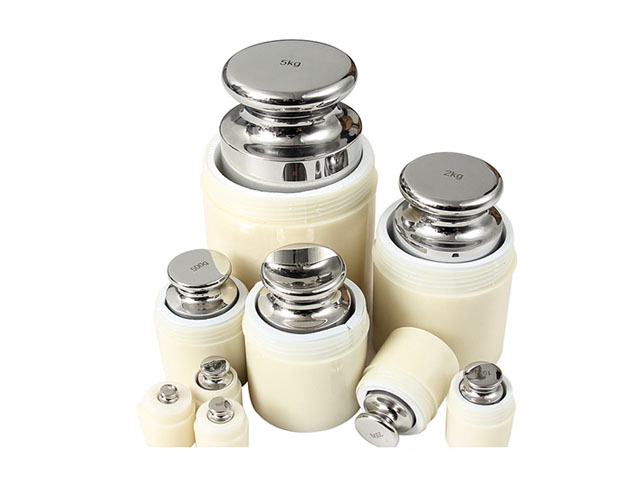
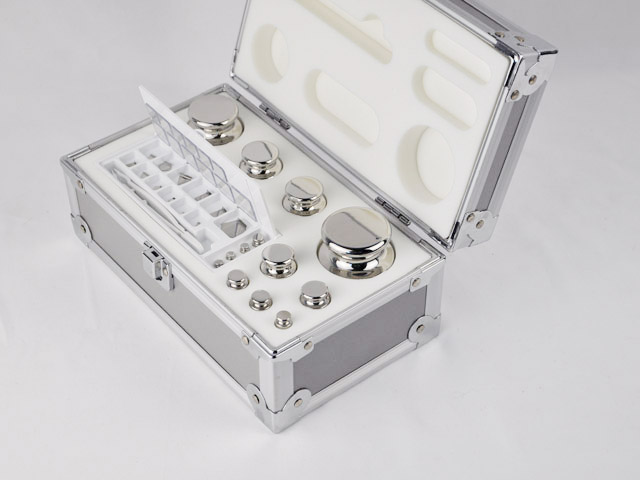
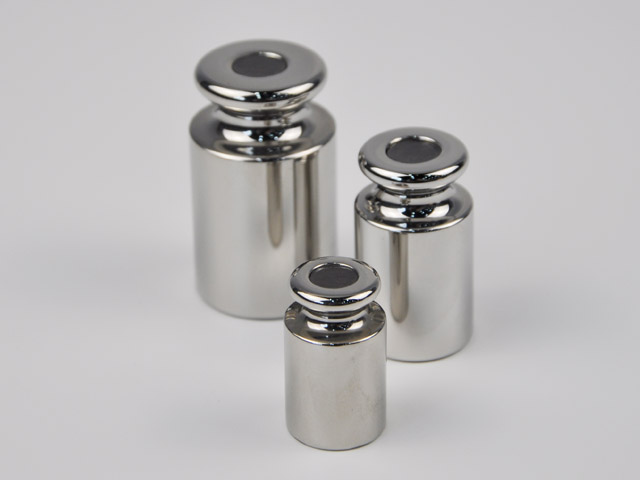
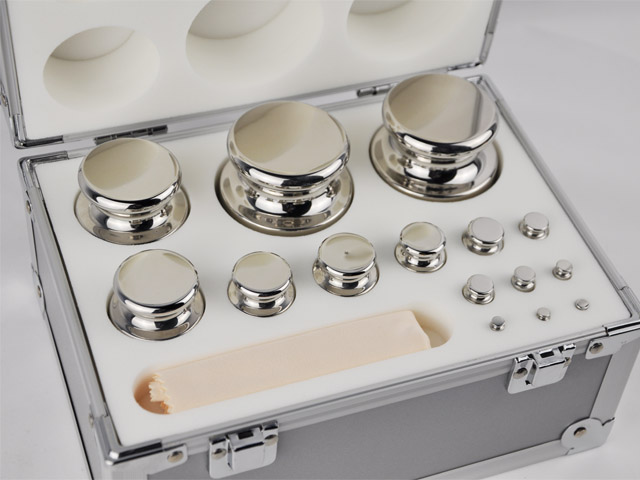
Oiml F2 Calibration Standard Weight
Mass measurement forms the foundational backbone of all quantitative scientific research, industrial production, and commercial transaction activities. Every data result obtained from weighing instruments, whether in laboratory analysis or industrial quality inspection, relies on consistent and traceable mass references to maintain credibility and uniformity. Oiml F2 calibration standard weights serve as critical intermediate mass references in the global mass measurement system, occupying a vital transitional position between high-level reference mass tools and daily working weighing equipment. These standard mass tools are engineered to deliver stable and accurate mass output, bridging the gap between ultra-precision primary measurement standards and conventional weighing devices used in routine operational scenarios, thereby ensuring the overall consistency and dependability of mass measurement data across diverse fields.
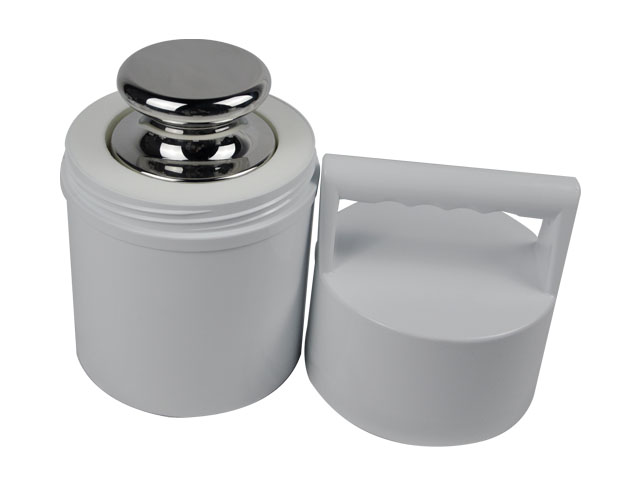
The core attribute that defines F2 calibration standard weights lies in their controlled mass deviation range and stable physical performance. Within the hierarchical system of mass measurement references, F2 grade sits between higher-precision F1 grade and commonly used M1 grade mass standards, featuring a balanced combination of precision level and environmental adaptability. This unique positioning enables these weights to undertake two core functional roles in practical application. First, they act as effective reference tools for the verification and adjustment of lower-grade mass standards, providing accurate mass benchmarks for M1 grade weights used in large-scale industrial and commercial scenarios. Second, they support the regular calibration and daily verification of medium and high-precision weighing instruments, covering most analytical and precision weighing equipment deployed in laboratories, manufacturing workshops, and quality testing institutions.
Material selection is the fundamental guarantee for the long-term stable performance of F2 calibration weights. Most qualified F2 mass standards adopt high-density, low-thermal-expansion metal materials with excellent anti-corrosion properties. Such materials can effectively resist the impact of ambient temperature fluctuations, air humidity changes, and minor chemical erosion in conventional working environments. The compact and uniform internal structure of the selected materials avoids internal porosity and structural defects that may cause mass drift. In addition, the surface of these weights undergoes fine polishing and special treatment to reduce surface roughness, which minimizes the adhesion of dust, moisture, and other tiny impurities in the air. This structural and surface optimization greatly reduces the possibility of mass change caused by external environmental factors during long-term use, maintaining consistent mass accuracy for extended service cycles.
The structural design of F2 calibration weights follows ergonomic principles and metrological functional requirements. Weights with medium and large nominal specifications generally adopt a segmented structure with an internal adjustment cavity. This reserved adjustable space allows technicians to conduct fine mass tuning during initial production and subsequent regular maintenance, offsetting tiny mass changes caused by long-term use, surface wear, or material aging. Small-specification F2 weights usually adopt an integrated solid structure to ensure overall structural rigidity and avoid micro-deformation that may affect measurement accuracy. All structural designs strictly follow unified dimensional and shape specifications, ensuring standardized contact areas during weighing placement, stable placement status, and no tilt or offset during instrument calibration. The overall design balances structural firmness, operational convenience, and metrological stability, adapting to repeated handling and placement in daily calibration work.
Environmental adaptability is a key advantage that makes F2 calibration standard weights widely applicable in multiple scenarios. Unlike ultra-high-precision mass standards that require extremely strict constant temperature, constant humidity, and dust-free working conditions, F2 weights can maintain stable metrological performance in conventional laboratory and industrial environments with mild environmental fluctuations. They can tolerate small ranges of temperature variation and normal indoor humidity changes, without generating obvious mass deviation or structural changes. This feature makes them suitable not only for professional metrology laboratories with controlled environmental conditions but also for on-site calibration work in general production workshops, inspection rooms, and commercial detection scenarios. Even in conventional working environments with slight dust and air flow interference, standardized operation can ensure the accuracy of calibration results.
In scientific research and academic laboratory scenarios, F2 calibration standard weights are indispensable basic metrological tools. A large number of quantitative experiments in chemistry, physics, material science, and environmental testing require accurate mass data support. Analytical balances and precision weighing instruments used for experimental data collection need regular calibration to eliminate system errors caused by long-term operation, component aging, and frequent use. F2 weights provide reliable mass benchmarks for the daily verification and periodic calibration of these high-precision weighing devices, ensuring that experimental data has repeatability and comparability. In university teaching laboratories, these weights also assist in completing experimental teaching related to mass measurement principles, helping researchers and students establish standardized measurement awareness and master correct instrument calibration methods.
The industrial manufacturing sector relies heavily on F2 calibration standard weights to maintain product quality consistency. In precision machinery manufacturing, electronic component production, pharmaceutical processing, and food production industries, mass parameters are important indicators of product qualification and batch consistency. Production line weighing equipment, including precision platform scales, analytical weighing devices, and quantitative filling and weighing equipment, needs regular calibration to avoid batch quality deviations caused by instrument drift. F2 weights can complete efficient and accurate calibration of these production weighing devices, ensuring that the mass detection data of raw material feeding, semi-finished product testing, and finished product inspection is accurate and reliable. This standardized mass calibration process helps enterprises reduce product quality fluctuations, control production errors within a reasonable range, and improve the overall level of production standardization.
In commercial measurement and quality supervision fields, F2 calibration standard weights provide important technical support for fair transaction and standardized detection. In trading scenarios involving high-value bulk materials, precious material detection, and commodity quality inspection, the accuracy of weighing results directly affects transaction fairness and quality evaluation effectiveness. Medium and high-precision commercial weighing instruments used in these scenarios need regular traceability calibration, and F2 weights are well-suited for this type of daily verification work due to their moderate precision and strong environmental adaptability. They can effectively correct the measurement errors of commercial weighing equipment, ensure that commodity weighing data conforms to unified measurement standards, and maintain the orderly development of commercial measurement activities. At the same time, third-party testing and inspection institutions also use F2 weights to complete the performance verification of various weighing instruments, providing objective and accurate measurement data for market supervision and technical evaluation.
Standardized use and scientific maintenance are essential to sustain the metrological performance of F2 calibration standard weights throughout their service life. In daily operation, staff need to follow standardized operating procedures, using professional tweezers or special handling tools to take and place weights, avoiding direct contact with hands. Sweat, grease, and skin residues on human hands will adhere to the weight surface, causing slow mass changes and affecting calibration accuracy. During use, weights should be placed stably on the horizontal weighing platform to avoid collision, drop, and friction with hard objects, so as to prevent surface scratches, structural deformation, and local wear that may damage metrological performance.
Regular cleaning and environmental storage management are also key links in maintenance. After each use, the surface of F2 weights should be gently cleaned with professional dust removal tools and soft cleaning materials to remove surface floating dust and tiny attachments. It is forbidden to use corrosive cleaning liquids or rough cleaning tools that may scratch the surface. When not in use for a long time, weights need to be placed in a dry, dust-proof, and constant-temperature storage container, avoiding long-term exposure to humid air, corrosive gas, or strong light irradiation. Good storage conditions can effectively slow down material oxidation and surface aging, maintaining the long-term stability of weight quality. In addition, regular performance inspection and cycle verification are required to timely detect tiny mass changes or structural abnormalities, ensuring that the weights always meet the required metrological performance indicators during use.
The value of F2 calibration standard weights in the mass measurement traceability system cannot be replaced by other grades of mass standards. Higher-grade mass standards focus on ultra-precision measurement and primary traceability, with harsh use and storage conditions, and are not suitable for frequent daily calibration operations. Lower-grade mass standards have relatively loose error control ranges and cannot meet the calibration requirements of high-precision weighing instruments. F2 weights perfectly make up for the functional gap between the two, achieving a balance of precision, stability, and practicability. They undertake the important task of transmitting mass measurement values from high-level standards to grassroots measuring equipment, ensuring that mass measurement data in all walks of life can be traced back to unified national and international mass standards, realizing the unity of measurement results in different regions and different scenarios.
With the continuous improvement of modern industrial production precision, scientific research level, and market supervision standards, the demand for accurate and traceable mass measurement is increasing day by day. As a key intermediate standard in the mass measurement system, F2 calibration standard weights are playing an increasingly important role in more professional fields. In emerging fields such as new material research, biopharmaceutical testing, and precision electronic manufacturing, higher requirements are put forward for the accuracy and stability of daily mass calibration, which further expands the application space of F2 weights. Their stable physical properties, standardized design, and wide environmental adaptability enable them to continuously adapt to the upgrading of industrial and scientific measurement needs, providing solid basic support for the standardized development of mass measurement work in various industries.
In practical application management, the standardized configuration and scientific use of F2 calibration standard weights are important symbols of the standardization level of enterprise measurement management and laboratory detection capability. A complete set of F2 standard weight resources and standardized calibration and maintenance processes can help enterprises build a sound internal measurement guarantee system, reduce measurement errors in production and detection links, and improve the credibility of product quality data and experimental results. For metrology technicians, mastering the correct use, maintenance, and calibration methods of F2 weights is the basic professional ability to ensure the effective operation of the mass measurement traceability system, which is of great significance for improving the overall level of social measurement standardization.
In conclusion, Oiml F2 calibration standard weights, with their reasonable precision positioning, stable physical performance, excellent environmental adaptability, and wide application scenarios, have become indispensable basic metrological tools in the field of modern mass measurement. They not only undertake the important function of mass value transmission and traceability in the measurement system but also provide reliable technical support for scientific research innovation, industrial quality improvement, and commercial fair transaction. Through standardized use and scientific daily maintenance, these standard weights can maintain long-term stable metrological performance, continuously output accurate mass reference benchmarks for various precision weighing scenarios, and lay a solid foundation for the standardized, accurate, and unified development of mass measurement work in all fields.
Oiml F2 Calibration Standard Weight
https://www.veidtweighing.com/calibration-weights.html
Post Date: Jun 19, 2026
https://www.supplier-manufacturer.com/calibration-weight/oiml-f2-calibration-standard-weight.html

![Heavy Duty Stainless Steel Large Industrial Test Weight]()
Heavy Duty Stainless Steel Large Industrial Test Weight
Heavy duty stainless steel large industrial test weights are essential precision components tailored for heavy-load industrial calibration and load testing scenarios, serv…![Standard Weight For Bench Scales]()
Standard Weight For Bench Scales
Bench scales serve as fundamental weighing instruments across industrial production, laboratory testing, commercial transactions, and quality inspection fields, delivering…![Stackable Cast Iron Weight]()
Stackable Cast Iron Weight
Stackable cast iron weights stand as a foundational and versatile tool across industrial, commercial, and residential functional scenarios, earning long-standing popularit…![F1 Class Calibration Weight]()
F1 Class Calibration Weight
Precision mass measurement forms the foundational pillar of modern scientific research, industrial manufacturing, quality control, and material testing, where even minor d…![25kg Oiml Standard Calibration Weight Crane Scale Test]()
25kg Oiml Standard Calibration Weight Crane Scale Test
Industrial weighing operations rely heavily on the stable and consistent performance of crane scales, which undertake weight measurement tasks for suspended loads in manuf…