Wheelchair Scales
Weight measurement serves as one of the most fundamental and routine health assessment methods in daily care and clinical medical work, offering intuitive data support for physical condition monitoring, disease diagnosis, and rehabilitation evaluation. For individuals with limited mobility, including the elderly with impaired movement, postoperative rehabilitation patients, and people with physical disabilities, traditional weighing tools and methods often bring obvious inconveniences and potential safety risks. Most conventional scales require users to stand stably on the weighing platform, which is difficult or even impossible for those who rely on wheelchairs for daily travel. Frequent transfer between wheelchairs and weighing equipment not only consumes substantial physical strength and caregiver energy but also increases the risk of falls, collisions, and physical discomfort. In response to this practical demand, wheelchair scales have emerged as a specialized weighing solution tailored for mobility-impaired groups, filling the gap of safe, convenient, and accurate weight measurement for non-ambulatory individuals in various living and medical scenarios.
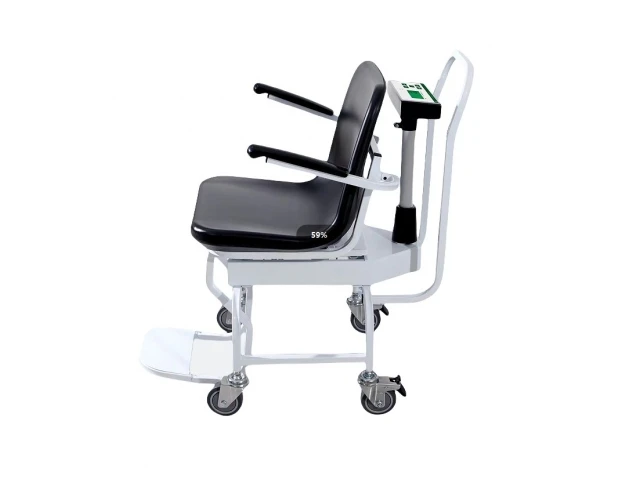
Different from ordinary household and commercial weighing devices, wheelchair scales are designed with the core concept of adapting to wheelchair use scenarios, focusing on solving the pain points of difficult weighing and unsafe transfer for wheelchair users. The overall structural design abandons the narrow platform of traditional scales and adopts a widened and ultra-flat platform structure, which can fully accommodate wheelchairs of different conventional sizes, ensuring that the four wheels of the wheelchair can stably land on the weighing surface without edge deviation or shaking. The low-height platform design effectively reduces the height difference between the ground and the weighing area, making it smooth and labor-saving to push wheelchairs onto the scale. Some matched auxiliary slope structures further optimize the access experience, avoiding jolts or stagnation during the entry and exit of wheelchairs, and creating a stable and safe weighing environment for users who cannot adjust their body posture independently.
The core functional advantage of wheelchair scale lies in their ability to complete human body weight measurement without separating the user from the wheelchair, which is the key to distinguishing them from other weighing equipment. In actual use, the tare function plays a vital role in improving weighing accuracy and simplifying operation steps. Before formal measurement, the empty wheelchair can be pushed onto the weighing platform, and the tare button can be activated to clear the equipment’s display data and offset the inherent weight of the wheelchair. After the zero-setting operation is completed, push the user sitting in the wheelchair steadily onto the scale, and the data displayed on the screen will automatically exclude the weight of the wheelchair and other attached items such as cushions and small carrying supplies, directly presenting the user’s pure body weight. This operation mode avoids the tedious steps of manually weighing the wheelchair in advance and calculating the difference value later, reduces human operation errors, and greatly improves the efficiency of daily repeated weighing work.
In terms of working principles, most mainstream wheelchair scales adopt precise sensor induction technology. When the wheelchair and the user act on the weighing platform, the high-sensitivity sensors inside the equipment can evenly sense the pressure from the bearing surface, convert the mechanical pressure signal into an accurate digital signal, and output stable and readable weight data through the internal system processing. The internal program can effectively resist subtle interference caused by slight body shaking or minor position deviation during weighing, ensuring that the measured data maintains stable fluctuation within a reasonable range. Compared with traditional mechanical weighing structures, the induction and data processing mode of modern wheelchair scales has higher sensitivity and more stable long-term use performance, which can meet the frequent and high-precision weighing needs in professional care scenarios.
Wheelchair scales have a wide range of application scenarios, covering professional medical institutions, rehabilitation centers, elderly care institutions, and family home care environments, forming an indispensable basic equipment system in the field of mobility health care. In hospital wards and outpatient departments, many patients with chronic diseases, postoperative recovery groups, and disabled patients need regular weight monitoring. Body weight changes are important reference indicators for judging physical recovery status, adjusting medication dosage, evaluating nutritional intake effects, and monitoring physical fluid changes. For example, patients with chronic organ diseases need long-term weight tracking to prevent physical edema and abnormal metabolic changes; postoperative rehabilitation patients need to observe weight fluctuations to judge the recovery of physical functions and the adequacy of nutritional supply. Wheelchair scales enable medical staff to complete weight collection quickly and safely during daily ward rounds and examinations, providing continuous and accurate data support for clinical diagnosis and treatment plan adjustment.
Rehabilitation centers and professional nursing institutions also rely heavily on wheelchair scales to carry out daily care and rehabilitation evaluation work. Many people with physical dysfunction need long-term rehabilitation training and physical condition monitoring, and regular weight recording can help rehabilitation therapists grasp the physical changes of users in real time, adjust rehabilitation training intensity and nutritional guidance plans in a targeted manner. For users with limb movement disorders, any unnecessary physical transfer may affect their physical recovery state and even cause secondary injuries. The non-transfer weighing mode of wheelchair scales perfectly avoids such risks, ensures the continuity and safety of the rehabilitation process, and also reduces the work pressure of nursing staff, enabling them to complete more standardized and efficient physical data management for users.
In home care scenarios, wheelchair scales bring great convenience to mobility-impaired users and their family caregivers. For the elderly with inconvenient legs and feet, family members often need to regularly record their weight changes to detect potential health risks in advance. Traditional weighing methods require assisting the elderly to stand or transfer, which is not only laborious but also prone to accidents. The placement and operation of household wheelchair scales are simple and easy to learn. Family members can independently complete the weighing operation without professional skills, realizing regular and daily family health monitoring. Long-term accumulated weight data can also provide effective reference for family doctors’ follow-up visits and health guidance, helping to build a continuous family health management system.
In terms of structural design details, wheelchair scales fully consider the practical needs of long-term use and scene adaptation. The surface of the weighing platform usually adopts non-slip and wear-resistant treatment, which can increase the friction between the wheelchair wheels and the platform, prevent accidental sliding during the weighing process, and further improve the overall safety. The overall structure is stable and firm, with good bearing balance performance, which can maintain a stable placement state on different flat ground such as indoor cement floors and wooden floors. The equipment is designed with reasonable weight range adaptation, which can meet the weighing needs of different body types of users and the bearing requirements of different types of conventional wheelchairs, with strong scene compatibility. In addition, the display part of the scale is usually designed with high-definition and large-font numbers, with clear and intuitive reading, which is convenient for both young and elderly caregivers to quickly read and record data, avoiding reading errors caused by blurred fonts or small display ranges.
Standardized use and daily maintenance are crucial to maintaining the stable performance and long service life of wheelchair scales. In the daily weighing process, it is necessary to place the equipment on a flat and hard horizontal ground first to avoid inaccurate data caused by uneven ground and shaking of the scale body. Before each use, it is necessary to check whether the weighing platform is clean and flat, remove sundries and stains on the surface, and ensure that the stress of the platform is uniform. When pushing the wheelchair into the weighing area, the operation should be gentle and stable, avoiding rapid impact and excessive extrusion on the platform, so as to prevent damage to internal sensors and structural parts. After the wheelchair is stably parked on the platform, wait for the data to stabilize before recording, so as to ensure the authenticity and effectiveness of the measured data.
Daily maintenance work mainly includes regular cleaning, placement protection and regular calibration. For the cleaning of the scale body, a soft dry cloth can be used for daily wiping. For stubborn stains, a slightly damp cloth can be used for gentle cleaning, and it is necessary to avoid a large amount of water penetrating into the interior of the equipment to prevent circuit failure and sensor damage. When not in use for a long time, the equipment should be placed in a dry and ventilated indoor environment, avoiding long-term exposure to humid, high-temperature and strong sunlight environments, so as to prevent aging and deformation of the scale body structure and failure of electronic components. In terms of data accuracy maintenance, regular calibration treatment can be carried out according to the frequency of use. Long-term frequent use may cause subtle data deviation, and standardized calibration can restore the accurate weighing performance of the equipment and ensure the reliability of long-term use data.
With the continuous improvement of social elderly care services and medical and rehabilitation service systems, the public’s attention to the health management and life quality of mobility-impaired groups is constantly increasing. Wheelchair scales, as a small but key specialized health equipment, play an irreplaceable role in reducing nursing risks, improving care efficiency, and standardizing health data management. It breaks through the limitations of traditional weighing methods, solves the practical difficulties in health monitoring of special groups, and integrates safety, convenience and accuracy into daily weighing work. Whether in professional medical and nursing institutions or ordinary family care scenarios, it can provide stable and reliable weight data support for physical condition monitoring, rehabilitation effect evaluation and daily health management of wheelchair users.
In the future, with the continuous upgrading of health service concepts and equipment manufacturing technology, the functional design and scene adaptation of wheelchair scales will be further optimized. More humanized structural designs and intelligent data management modes will be integrated into such equipment, making the weight monitoring of mobility-impaired groups more convenient, accurate and intelligent. As an important part of inclusive health service equipment, wheelchair scales will continue to help improve the level of refined care for special groups, create a safer and more convenient health monitoring environment for wheelchair users, and lay a solid foundation for personalized health management and high-quality rehabilitation care services.
https://www.veidtweighing.com/IndustrialScale/WheelchairScale
Post Date: Jun 7, 2026
https://www.supplier-manufacturer.com/weight-balance-scale/wheelchair-scales.html

![Stainless Steel Calibration Weight For School Laboratory Teaching]()
Stainless Steel Calibration Weight For School Laboratory Teaching
Stainless steel calibration weights are fundamental teaching tools tailored for school laboratory science courses, covering physics, chemistry, and general science experim…![Standard Weight For Counting Scales]()
Standard Weight For Counting Scales
In modern industrial production, inventory management, and precision manufacturing, counting scales have become indispensable tools for quantifying bulk small parts, compo…![Standard Weight For Laboratory Balances]()
Standard Weight For Laboratory Balances
In modern laboratory scientific research, industrial detection, and analytical testing, the accuracy and reliability of weighing data serve as the fundamental guarantee fo…![Forklift Scale Calibration Standard Weight]()
Forklift Scale Calibration Standard Weight
Forklift scale calibration with standard weights serves as a core operational practice in industrial logistics, manufacturing, and warehouse management, ensuring that onbo…![500g Calibration Weight For Balance Scale]()
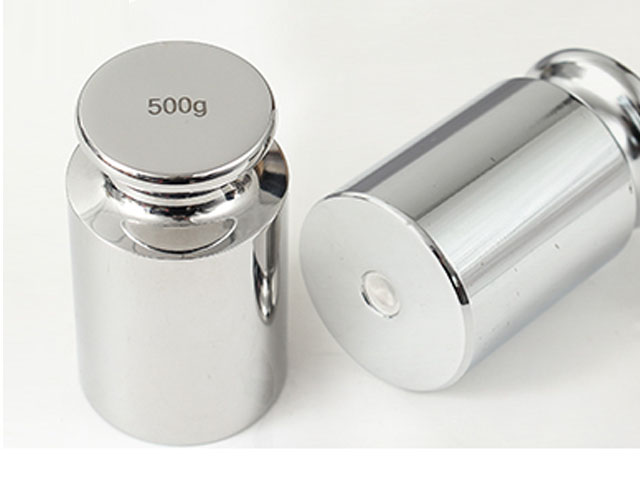
500g Calibration Weight For Balance Scale
In every industry and research field that relies on accurate mass measurement, maintaining the reliability of balance scales is a fundamental prerequisite for consistent a…